
At WUXI BELT Co., Ltd., we offer robust AC compressor drive belts engineered to deliver superior power-transmission performance in demanding automotive and HVAC applications. Built with high-quality materials and precision manufacturing, our belts offer high efficiency (transmission efficiencies exceeding 96% in selected ribbed designs) and exceptional durability — reducing energy loss, maintenance needs and downtime. With quiet operation, compatibility across a wide range of compressor systems, and fully customizable options to match your OEM or aftermarket requirements, our AC compressor drive belts empower you to offer reliable, high-value solutions that serve global markets efficiently.

AC Compressor Drive Belts offer excellent power transmission efficiency, ensuring optimal system performance.

Made from high-quality materials, these air conditioning serpentine belts are resistant to wear and tear, ensuring a long service life.

These industrial power transmission belts operate quietly, contributing to a more pleasant indoor environment.

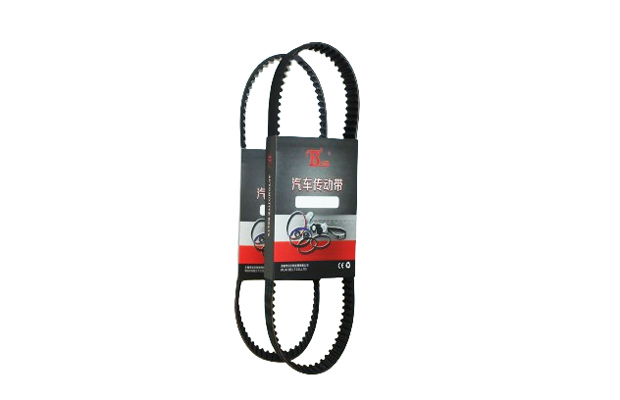
Available in various sizes and specifications, our AC compressor drive belts are compatible with different air conditioning systems.
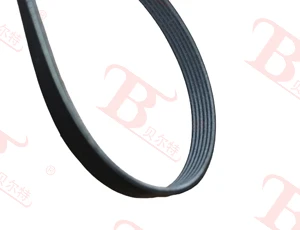
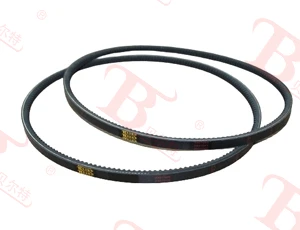
As the core transmission components of automotive air conditioning systems, both air conditioning V-belts and air conditioning multi-ribbed belts belong to the AC compressor drive belt category, but there are significant differences in structural design, performance characteristics, and applicable scenarios. With our customized R&D capabilities, we can provide precisely adapted products according to the air conditioning system requirements of different vehicle models, helping customers select the optimal transmission solution.
| Category | Air Conditioner Raw Edged V Belt | Air Conditioner Poly-V Ribbed Belt |
| Structural Form | Feature a wedge-shaped cross-sectional design, with one side in the structure of an isosceles trapezoid. They transmit power through the lateral contact between the belt body and the pulley groove. | Have multiple parallel wedge-shaped ribs arranged on a flat belt base. They combine the flexibility of flat belts with the wedge-driven characteristics of V-belts, achieving power transmission through the simultaneous contact of multiple ribs with the pulley. |
| Contact Area & Force Distribution | Relatively small contact area with the pulley. Power transmission mainly relies on the friction of the single-sided wedge surface, resulting in relatively concentrated stress. | Achieve multi-point contact with the pulley grooves through multiple ribs. Their contact area is more than 30% larger than that of V-belts of the same width, leading to more uniform force distribution and dispersed pressure per unit area. |
| Core Advantages | (1) Strong cost adaptability: Simple structure, mature production process, and lower cost, suitable for economical vehicle models or older A/C systems focusing on cost control. (2) High maintenance convenience: Independent single-belt drive, easy installation and replacement, suitable for limited maintenance conditions and open transmission layouts of some commercial vehicles. (3) Outstanding impact resistance: Strong rigidity of the belt body, better resistance to load fluctuations (e.g., when a truck starts A/C at idle speed). | (1) Higher transmission efficiency: Multi-rib synchronous contact achieves over 96% efficiency (compared to ~90–93% for V-belts), reducing energy loss and supporting new energy vehicles by lowering power consumption. (2) Flexible space adaptability: Thin and flexible belt body, compatible with compact layouts and smaller pulley diameters, saving installation space. (3) Stronger operational stability: Multi-point contact disperses force, reduces vibration noise by 10–15 dB, and minimizes slipping—ideal for passenger cars requiring quietness (e.g., premium cars and new energy vehicles). (4) Longer service life: More uniform force distribution reduces local wear; with customized anti-aging rubber base materials (e.g., EPDM), service life is extended by more than 50% compared to traditional V-belts. |
| Typical Application Scenarios | - Commercial vehicles (trucks, buses): Need to adapt to high loads and open layouts, with high maintenance convenience. - Economical passenger cars or older models: Low compressor power, stable load, focus on cost control. - Vehicles in harsh environments (e.g., construction vehicles): Require resistance to dust, oil, and easy cleaning/maintenance due to single-sided sealed structure. | - Passenger cars, especially new energy vehicles and premium models: Require compact installation, quiet operation, high efficiency, and extended service life. |
 What is the role of an AC compressor drive belt in an HVAC system?
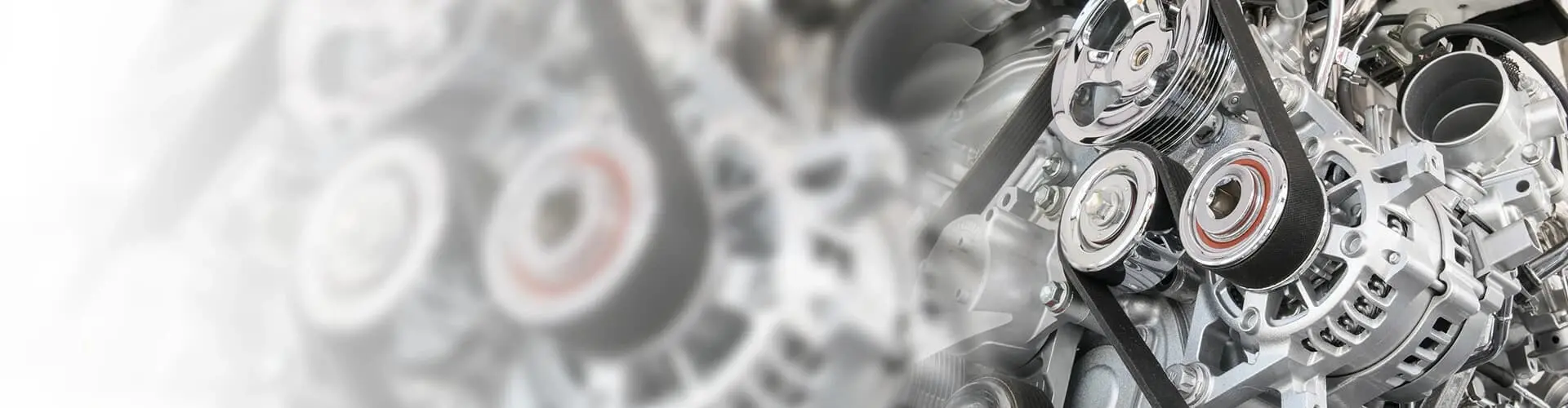
High-quality AC compressor drive belts reduce system downtime and maintenance costs. Reliable AC compressor serpentine belts minimize service interruptions for commercial facilities, ensuring consistent cooling for offices, warehouses, or industrial spaces.
How often should I replace my AC compressor drive belt?
Typically every 60,000 to 100,000 miles, but check your air conditioner’s manual.
Can I replace the AC compressor drive belt myself?
Yes, with the proper tools and following the air conditioner's manual.
What materials are AC compressor drive belts made from?
Usually rubber with synthetic fibers for added strength.
How do I know which AC compressor drive belt fits my system?
Refer to your air conditioner's manual or consult with a professional.