In modern powertrain engineering, a drive belt is far more than a flexible loop of rubber. It is a critical component engineered to transmit torque, synchronize mechanical movements, and withstand hostile operational environments. For industrial procurement managers, automotive engineers, and original equipment manufacturers (OEMs), choosing off-the-shelf transmission components often leads to premature failures, parasitic power losses, or integration bottlenecks.
Investing in custom drive belts ensures that every variable—from elastomeric chemistry to internal tensile cords—is perfectly calibrated to your specific application's mechanical load and environmental demands. This technical guide breaks down the core engineering principles of custom drive belts manufacturing, material science, and supply chain optimization.
The base elastomer determines how well a belt resists thermal degradation, chemical exposure, and physical wear. For high-performance industrial and automotive applications, the material selection process typically narrows down to two primary synthetic rubbers: Ethylene Propylene Diene Monomer (EPDM) and Hydrogenated Nitrile Butadiene Rubber (HNBR). Selecting the ideal compound for your custom drive belts depends strictly on your operational temperature range and oil exposure dynamics.
| Performance Metric | EPDM (Ethylene Propylene Diene) | HNBR (Hydrogenated Nitrile) |
|---|---|---|
| Temperature Range | -50°C to 150°C | -40°C to 165°C (Peak 180°C) |
| Oil & Fuel Resistance | Poor (Swells and degrades) | Excellent (High oil resistance) |
| Tensile Strength | Moderate | Very High (Resists tooth shear) |
| Dynamic Fatigue Life | High (Excellent flex life) | Superior (Ideal for high loads) |
| Primary Application | Serpentine Belts, Accessory Drives | Timing Belts, Heavy-Duty Engines |
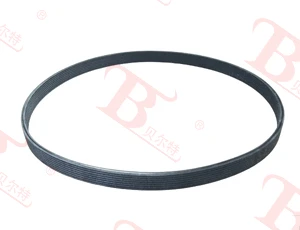
EPDM is the industry standard for custom drive belts used in Front-End Accessory Drive (FEAD) systems, such as serpentine belts. It exhibits exceptional resistance to ozone, weathering, and heat aging. With a functional temperature range spanning from -50°C to 150°C, EPDM excels in environments where the belt must endure millions of flexes over a long service life without cracking. However, EPDM has low resistance to petroleum-based oils and solvents; prolonged exposure will cause the rubber to swell, lose tension, and structurally fail.
When a custom drive belt must operate inside an engine enclosure or close to hydraulic systems where oil mist is present, HNBR is the mandatory choice. By hydrogenating nitrile rubber, the polymer structure gains incredible thermal stability (withstanding continuous temperatures up to 165°C and peaks at 180°C) and robust resistance to oil degradation. HNBR provides significantly higher tensile strength and tooth shear resistance compared to EPDM, making it the premier material for custom timing belts and heavy-duty synchronized drives.
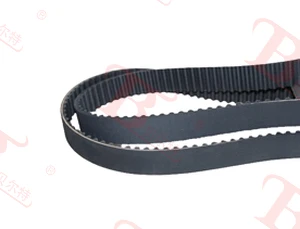
While accessory serpentine belts rely purely on friction to transfer power, custom timing belts rely on precise mechanical engagement (meshing) between the belt teeth and pulley grooves. To prevent timing slips, jumping teeth, or structural stretching under load, engineers must specify the correct internal tensile cords and external tooth profiles during the custom drive belts design phase.
Rubber handles flexibility, but the tensile cords embedded inside the elastomer carry the actual mechanical load.
Fiberglass Cords: These represent the standard for high-precision timing applications due to their high tensile strength, excellent flex life, and near-zero elongation under load. Fiberglass ensures the belt maintains a constant pitch length throughout its operational life.
Aramid (Kevlar) Cords: For applications subjected to extreme shock loads, sudden start-stop cycles, or high torque, aramid cords are utilized. They offer superior impact resistance, though they exhibit slightly more elasticity over time compared to fiberglass.
The shape of the belt tooth dictates how stress is distributed across the pulley. Modern custom drive belts manufacturing has evolved from legacy trapezoidal shapes to advanced curvilinear and modified curvilinear designs.
Trapezoidal Profiles (e.g., XL, L, H): These older designs are highly efficient at low speeds but create high stress concentration at the root of the tooth, limiting their torque capacity and increasing operational noise at higher RPMs.
Curvilinear Profiles (e.g., HTD): Featuring rounded teeth, this geometry distributes stress much more evenly throughout the tooth structure. This drastically reduces root shear and allows the custom drive belt to transmit significantly higher torque loads.
Modified Curvilinear Profiles (e.g., STD, GT): These hyper-optimized shapes feature a shallower tooth depth and optimized flank angles. They eliminate back-lash almost entirely, providing maximum positioning accuracy and quiet operation in high-speed systems.
Explore our comprehensive catalog of tooth profiles and dimensional choices on our Products Page.
Operating custom drive belts under extreme conditions—such as heavy industrial mining, agricultural harvesting, or high-RPM automotive tuning—introduces severe mechanical stresses. Standard, off-the-shelf belts frequently succumb to predictable failure modes under these conditions. Understanding these failures allows engineers to design robust custom workarounds.
In high-torque, heavy-duty applications, the primary failure mode is tooth shear—where the rubber teeth are literally ripped off the belt base due to excessive rotational force. To combat this, custom drive belts can be built with reinforced tooth-facing fabrics, such as high-density woven nylon fabrics. This specialized layer lowers the coefficient of friction and mechanically reinforces the teeth against shearing.
At high RPMs, centrifugal force tries to pull the belt away from the pulley, leading to slippage, while the rapid flexing generates intense internal hysteretic heat (heat buildup from internal friction). Standard belts stretch, slip, and melt. Custom drive belts engineered for high-RPM environments utilize premium oil- and aging-resistant compounds combined with precise dynamic balancing. This setup ensures uniform mass distribution, eliminating harmonic vibrations and maintaining a stable grip even past 10,000 RPM.
Sourcing high-performance custom drive belts requires an industrial manufacturing partner capable of balancing stringent technical quality with commercial flexibility. For global B2B procurement, evaluating the supplier’s production infrastructure and quality management certifications is crucial.
Traditional manufacturing lines often demand massive Minimum Order Quantities (MOQs) and enforce months-long lead times for custom tooling. For specialized machine builders or niche automotive modifiers, this ties up valuable capital in excess inventory. Modern custom drive belts suppliers utilize intelligent, flexible automated production clusters. This advanced manufacturing approach allows for small-batch customization, enabling clients to order precise quantities without sacrificing cost efficiency or facing long lead times.
When safety and zero-defect compliance are non-negotiable, working with an ISO9001 and IATF 16949 certified factory is paramount. IATF 16949 is a rigorous global automotive quality management standard that mandates 100% material traceability, strict statistical process controls, and rigorous dynamic testing. A certified facility conducts extensive quality checks across dozens of performance indicators—including dynamic fatigue testers, tensile strength meters, and heat-aging chambers—guaranteeing that every batch performs flawlessly in the field.
Maximizing the efficiency and operational lifespan of your powertrain machinery requires a meticulous approach to custom drive belts engineering. By precisely aligning your base elastomer chemistry (EPDM vs. HNBR) with your environmental conditions, optimizing internal cord materials, and utilizing advanced tooth profiles, you effectively eliminate the root causes of premature belt failure. Partnering with an agile, certified manufacturer ensures that your custom components are delivered with technical precision, flexible volumes, and full quality compliance.
Ready to optimize your equipment's power transmission? Contact our professional technical engineering team today to request a comprehensive custom design layout and an obligation-free commercial quote.
HNBR custom drive belts can reliably handle continuous operational temperatures up to 165°C, with short peak exposures reaching up to 180°C, making them highly effective for closed engine compartments.
Yes. Thanks to modern, flexible automated production lines, we support small-batch custom manufacturing, effectively breaking the traditional industry barrier of high MOQs and extended lead times.
Our advanced production infrastructure can manufacture full-range custom timing belts with a pitch circumference ranging from 150 mm up to 5000 mm to fit varied machinery geometries.
IATF 16949 certification ensures the factory adheres to strict automotive-grade quality standards, providing full material traceability, automated process controls, and a near-zero defect rate across all production batches.