```html
As a leading poly v belt manufacturer, we understand that the reliability of your transmission system depends on the precision and durability of every component. A high-quality poly v serpentine belt is engineered to withstand rigorous mechanical stresses, but like any industrial component, it can experience failure if external factors are not properly managed. In this comprehensive guide, we provide a deep dive into failure mode analysis, root cause troubleshooting, and the professional standards required to optimize the lifespan of your drive system.
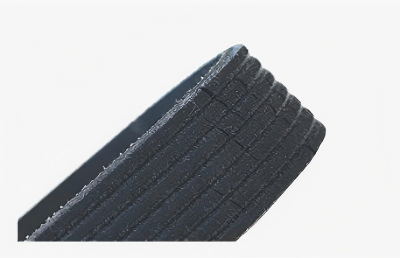
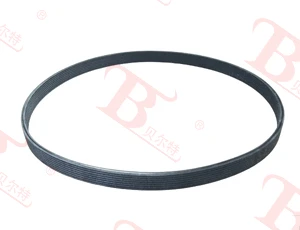
Poly v serpentine belts (also known as multi-ribbed belts) are highly efficient power transmission components designed with multiple longitudinal ribs that fit into matching grooves on pulleys. This design allows for a much larger surface contact area compared to traditional V-belts, enabling them to transmit more power in a compact space while running with reduced vibration and noise. Because they "snake" around multiple accessories—such as the alternator, power steering pump, water pump, and A/C compressor—they are essential for smooth engine and machine performance. Their ability to handle high-speed operations and varied load conditions makes them the industry standard for both automotive and industrial heavy-duty applications.
Unlike standard belts, the poly v serpentine belt profile distributes pressure more evenly across the entire contact width. This characteristic minimizes stretching and wear, provided that the system alignment and tension are correctly maintained. However, because these belts interact with so many different rotating components, they are uniquely sensitive to the condition of the entire drive train.
When a transmission system experiences issues, the belt often provides visual clues regarding the root cause. Below is a breakdown of typical failure patterns observed in industrial and automotive applications. Analyzing these symptoms is the first step in effective predictive maintenance.
| Failure Mode | Likely Root Causes | Professional Solutions |
|---|---|---|
| Belt Breakage (Snap) | Excessive tension; foreign objects or internal parts shifting and hitting the belt. | Reset tension to optimal range; remove foreign objects and realign drivetrain parts. |
| Edge Wear | Pulley misalignment; belt vibration during operation; pulley defects. | Realign pulleys; adjust tension; replace damaged pulleys. |
| Rib Cracking | Tension too high or too low; excessive heat; over-usage. | Replace belt; adjust tension; inspect cooling fan efficiency. |
| Rib Mismatch | Incorrect pulley rib/height specifications. | Replace belt; ensure pulley and belt specifications match. |
| Rib/Body Separation | Debris (e.g., small stones) cutting the belt; pulley misalignment; incorrect rib height. | Remove foreign matter; realign pulleys; use correct belt/pulley specifications. |
If your poly v serpentine belt breaks unexpectedly, the tension might be severely overtightened, creating a state of excessive stress on the internal tensile cords. When these cords reach their elastic limit, the rubber matrix fails, resulting in a sudden, violent snap. Alternatively, foreign debris—such as small stones, metallic shards, or shifting internal components—may be striking the belt during high-speed rotation. This physical damage creates a point of weakness that propagates across the width of the belt.
To resolve this, ensure the tension is calibrated to the manufacturer's recommended range using a professional-grade tension gauge rather than estimation. Additionally, perform a thorough inspection of the wheel system to confirm all parts are correctly positioned and secured. Do not simply swap the belt; verify that the drive path is clear of any obstructions before installing a replacement.
Misalignment is the primary enemy of the poly v serpentine belt. If a belt shows one-sided wear, it is often because the pulley is not parallel, causing the belt to track improperly and rub aggressively against the guide edge. This friction generates localized heat, which can melt the rubber ribs and destroy the belt’s grip within minutes.
If the rib profile is mismatched or the ribs are separating from the belt body, the issue usually stems from using incompatible pulleys or allowing foreign objects to damage the rib surface. As a professional poly v belt manufacturer, we recommend verifying pulley parallelism and rib height precision every time a belt is replaced. Using a laser alignment tool is the most reliable way to ensure that your pulleys are in the correct plane, significantly extending the life of your power transmission components.
Rib cracking is frequently a sign of thermal fatigue or improper tension settings. Rubber compounds are highly sensitive to their operating environment. If the working temperature is consistently too high, or if the belt has reached the end of its service life, the rubber compound becomes brittle and loses its necessary elasticity. The cracks usually appear at the base of the ribs, where the belt undergoes the most extreme bending stress.
Always ensure that auxiliary cooling systems (like fans) are functional and that the belt tension is neither too loose nor too tight to prevent unnecessary heat buildup through friction. If you operate in an environment with extreme heat, talk to your supplier about selecting specific heat-resistant rubber compounds designed for high-temperature durability.
Another major factor often overlooked is "shock loading"—the practice of starting a machine at full speed or subjecting it to abrupt, heavy load changes. Every time the machine undergoes a hard start, the belt experiences a torque spike that is several times greater than the standard operating torque. This force can cause the belt to slip momentarily or stretch, eventually leading to permanent deformation. For industrial applications, implementing a "soft start" sequence—where the machine ramps up speed gradually—will substantially increase the longevity of your belt.
Maximizing the operational efficiency of your power transmission system requires more than just replacing parts; it requires understanding the entire system environment. Whether you are dealing with vibration, misalignment, thermal stress, or load spikes, proactive maintenance is the key to minimizing downtime. By treating your drive system as a holistic unit—where pulleys, tensioners, and belts work in concert—you can avoid the common pitfalls that lead to premature failure.
At Wuxi Belt, we are committed to providing high-performance transmission solutions tailored to your specific industrial needs. If you require technical assistance or wish to source reliable components, please explore our Products Page. For personalized support from a trusted poly v belt manufacturer, Contact Our Team today to discuss your unique specifications and industrial challenges.
What is the most common cause of poly v serpentine belt breakage?
The most common causes are excessive tension and mechanical damage caused by foreign debris entering the transmission system.
How do I know if my pulley alignment is causing belt wear?
If you observe one-sided wear on your poly v serpentine belt, it strongly suggests that the pulleys are misaligned, causing the belt to track improperly or slide against the guide edges.
Can rib cracking be caused by external factors?
Yes, rib cracking is often caused by incorrect tension (too loose or too tight), high operating temperatures, or simply over-usage, which accelerates the aging of the belt material.
What should I do if the belt ribs are separating from the belt body?
This usually indicates external physical damage (like small stones cutting the belt) or a mismatch between the belt and the pulley dimensions. Inspect the system for debris and verify the pulley specifications.
```