A motorcycle drive belt rarely fails without warning. Long before the belt breaks or becomes unusable, changes in heat, surface condition, tension, and pulley contact are often already affecting the way it transmits power.
This matters because replacing a worn motorcycle drive belt without understanding why it failed can lead to the same problem happening again. Heat may harden the belt compound, incorrect tension can increase stress, and pulley problems can create uneven wear. In many cases, several of these conditions develop together rather than independently.
For motorcycle manufacturers, parts distributors, and replacement belt buyers, understanding these failure patterns is useful not only for maintenance but also for selecting a belt that better matches the actual transmission system.
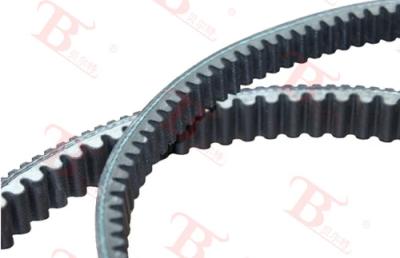
Heat is one of the most important factors affecting drive belt life because rubber compounds continuously flex as the belt travels around the pulleys. Normal operation naturally generates some heat, but excessive temperature can accelerate material aging.
As the belt becomes hotter over repeated operating cycles, the rubber may gradually lose some of its flexibility. A belt that has hardened cannot respond to bending and load changes as effectively as it did when new. Over time, small cracks or changes in the working surface may begin to appear.
Heat can come from more than one source. Long periods of operation, heavy load, poor ventilation around the transmission area, excessive belt tension, or persistent slippage can all contribute to higher operating temperatures.
This is why visible cracking should not always be treated as an isolated material problem. If a motorcycle drive belt shows unusual hardening or cracking earlier than expected, the operating conditions and drive setup should also be checked.
Material selection becomes especially important in demanding applications. A belt compound and reinforcement system should be able to maintain stability under the heat and repeated flexing expected from the intended motorcycle transmission.
A worn belt can provide useful clues about what is happening elsewhere in the drive system. Instead of looking only at how much material has been lost, it is worth looking at where and how that wear appears.
Relatively even wear across the working surfaces may simply indicate normal service over time. Heavy wear concentrated on one side, however, often points to poor alignment or abnormal pulley contact. A polished or glazed surface can indicate that the belt has been slipping and generating excessive frictional heat.
Cracks are another useful warning sign. They may develop after the belt compound has been exposed to prolonged heat, repeated bending, or unsuitable operating stress. Frayed edges can suggest that the belt is tracking incorrectly or making contact with a damaged part of the pulley system.
The pulley itself should therefore be inspected whenever early belt wear appears. Installing a new motorcycle drive belt on a worn, contaminated, or misaligned pulley may only transfer the same wear pattern to the replacement.
For distributors and aftermarket suppliers, these failure patterns are also useful when evaluating customer complaints. Not every short service-life issue can be traced back to belt manufacturing. Installation and surrounding drive components need to be considered before identifying the root cause.
A friction-driven motorcycle belt depends on reliable contact with the pulley to transmit torque. When that contact becomes insufficient, the belt can begin to slip instead of transferring power cleanly.
Slippage is particularly damaging because it can become a self-reinforcing problem. Relative movement between the belt and pulley generates additional friction and heat. That heat can change the condition of the belt surface, reducing effective contact and making further slippage more likely.
A glazed working surface is one possible result. Instead of maintaining the intended friction characteristics, the surface becomes smoother and less effective at transmitting load. The rider or maintenance technician may notice inconsistent power transfer, unusual noise, or other changes in drive behavior before severe physical damage is visible.
Slippage does not automatically mean that the motorcycle drive belt is defective. Incorrect tension, a worn pulley, contamination, poor alignment, or using a belt that does not match the application can all contribute.
The operating load also matters. A belt that appears acceptable during light operation may reveal grip or stability problems when acceleration or transmission load increases. For this reason, belt performance should be considered under the conditions in which the motorcycle actually operates rather than only during a simple installation check.
Belt tension has to remain within the range intended for the drive system. Both insufficient and excessive tension can cause problems, although the failure patterns may be different.
If the belt is too loose, effective contact with the pulley may be reduced. Depending on the transmission design, this can contribute to slipping, vibration, irregular tracking, and additional heat generation.
Excessive tension creates a different type of stress. A belt that is pulled too tightly is subjected to unnecessary tensile load while bending around the pulleys. Additional load can also be transferred to shafts, bearings, and related transmission components.
This is why tightening a slipping belt as much as possible is not a reliable solution. The correct response is to identify why the belt is slipping and then set tension according to the requirements of the specific drive system.
When installing a replacement motorcycle drive belt, pulley alignment and condition should be checked at the same time. Proper tension cannot compensate for a damaged pulley or an incorrectly aligned transmission.
Longer belt life depends on more than choosing a durable material. The belt has to work correctly with the pulley system, expected load, operating temperature, and installation conditions.
For a replacement application, the original belt specification is an important starting point. The correct profile, dimensions, and construction need to match the motorcycle's transmission. If the previous belt failed unusually early, simply copying its size without investigating the cause may not solve the problem.
For OEM and aftermarket projects, application information becomes even more valuable. Motorcycle type, drive configuration, operating conditions, and expected load can help a manufacturer evaluate whether a standard belt construction is suitable.
Manufacturing consistency also matters when belts are purchased in volume. Stable dimensions, controlled material quality, and consistent reinforcement help reduce differences between batches. Buyers can review WUXI BELT's broader power drive belt range for motorcycle and other transmission applications.
WUXI BELT manufactures drive belts for automotive, industrial, agricultural, and motorcycle applications. For motorcycle belt projects, the goal is not simply to produce a belt that fits, but to match its construction to the transmission conditions in which it will operate.
Early motorcycle drive belt failure is often the result of several connected factors. Heat can age the rubber, slippage creates additional friction, incorrect tension increases stress, and pulley problems can produce abnormal wear. Treating only the visible belt damage may therefore miss the actual cause.
A better approach is to evaluate the complete drive system. Check the belt specification, tension, pulley condition, alignment, and working environment before replacing a belt that has failed earlier than expected.
For motorcycle manufacturers, distributors, or aftermarket suppliers sourcing drive belts in volume, application matching is equally important. If you need help evaluating a motorcycle drive belt specification or developing a belt for a particular application, contact WUXI BELT to discuss your transmission requirements.
Early wear can result from excessive heat, incorrect tension, pulley misalignment, slippage, contamination, or a belt that does not match the operating conditions.
A smooth or glazed surface can be associated with repeated friction and heat, often linked to slippage or abnormal pulley contact.
Yes. Excessive tension increases stress on the belt and can also place unnecessary load on bearings, shafts, and other drive components.
Yes. Pulley wear, contamination, damage, or misalignment can cause a new belt to develop the same premature wear as the previous one.